
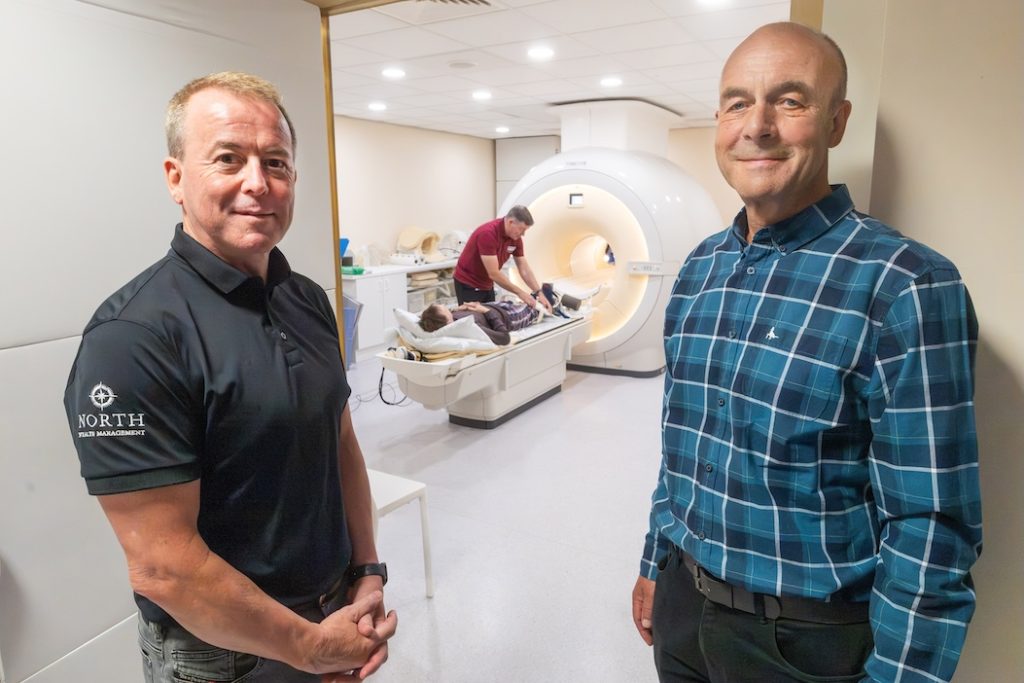
Former Scottish professional footballer and now Cleadon based financial adviser Marc Millar has spoken movingly about his personal commitment to Motor Neuron Disease (MND) research after losing his mother to the devastating illness and becoming an ambassador for MND Scotland.
Marc’s mother died in July 2025 after living with MND for almost two years, prompting him to become actively involved in raising awareness and supporting research into the disease.
Although now based in North East England, Marc was invited to become an ambassador for MND Scotland because of both his personal connection and his profile from a successful football career in Scotland during the 1990s and early 2000s.
As part of his ambassadorial role, Marc recently visited Newcastle University, alongside Colin Houghton of the Darby Rimmer MND Foundation, to learn more about pioneering research that could transform how MND is diagnosed.
The visit was hosted by Professor Roger Whittaker and his research team, including MND Scotland-funded researcher Ao Wang, whose work is focused on developing ways of diagnosing MND at a much earlier stage.
Currently, many people wait between 12 and 18 months before receiving a confirmed diagnosis, by which time the disease has often progressed significantly. Earlier diagnosis could ultimately allow patients to access treatment, support and future therapies much sooner.
MND Scotland is funding the Newcastle research because of its potential to make a significant difference to people affected by the disease.
Marc Miller said:
“My involvement with MND Scotland came through very unfortunate personal circumstances after losing my mum to Motor Neuron Disease. It’s something that’s incredibly close to my heart, so when I was asked to become an ambassador, it was an easy decision.
“Having spent my football career in Scotland, I still have many contacts there and, if my profile can help raise awareness and support research, then that’s something I’m proud to do.
“Visiting Newcastle University was genuinely inspiring. You don’t always see the incredible work taking place behind laboratory doors, but what Professor Whittaker and his team are doing is remarkable.
“The focus isn’t simply on treatment; it’s about diagnosing MND much earlier. At the moment diagnosis can take well over a year, and that’s precious time for patients and families. The research being carried out gives real hope that one day diagnosis could happen much sooner.”
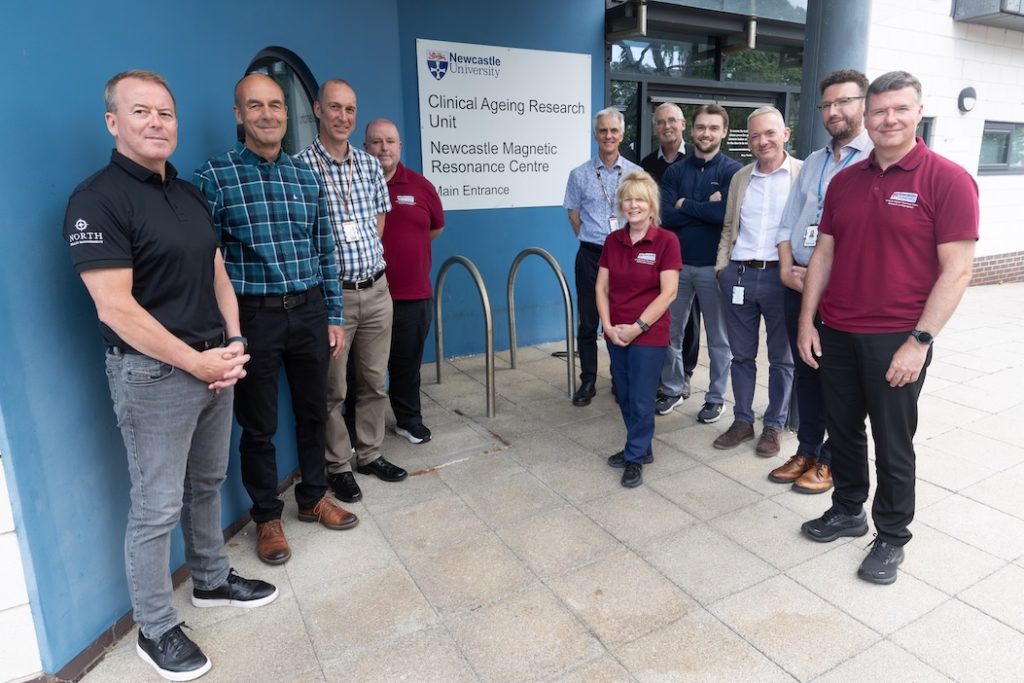
Colin Houghton, whose family established the Darby Rimmer MND Foundation following the diagnosis of former footballer Stephen Darby, added:
“Families affected by MND know only too well how important time is. Supporting research that could lead to earlier diagnosis is incredibly important, and it’s encouraging to see Newcastle University leading work that has the potential to benefit people well beyond the North East.”
Away from his ambassadorial work, Marc is a financial adviser with St. James’s Place, helping individuals, business owners and companies plan their financial futures.
He said:
“My day job is helping people understand their finances and plan for the future, but supporting MND Scotland is something that’s deeply personal. If sharing my family’s experience encourages greater awareness or helps support this important research, then it’s absolutely worthwhile.”
Motor Neuron Disease affects thousands of people across the UK and remains an incurable neurological condition. Research into earlier diagnosis is regarded as one of the most important areas of work, giving patients the opportunity to receive specialist care and access future treatments as early as possible.
Dr Jane Haley, interim CEO and director of research at MND Scotland, said: “MND Scotland are hugely grateful to Marc for agreeing to become an ambassador and help us raise awareness of MND, a condition that very sadly took his mother. As this research highlights, not enough is known about the disease which makes it challenging to diagnose. With the help of our incredible supporters, MND Scotland is able to fund Professor Whittaker’s research in the hope that diagnosing MND will become a quicker process, allowing people to access support as early as possible.”
For more information about MND Scotland visit www.mndscotland.org.uk.
Photos Steve Brock